Building to a Number: Getting a Good House Without Overreaching
Most people who call us have a number in their head. Sometimes they say it out loud in the first two minutes. More often it takes a while, because there's a worry that naming a budget means getting a lesser house.
Most people who call us have a number in their head. Sometimes they say it out loud in the first two minutes. More often it takes a while, because there's a worry that naming a budget means getting a lesser house.
It doesn't. In twenty-eight years of building in the Piedmont, the projects that go smoothest are the ones where the number came first and everything else got designed around it. The projects that go sideways are the ones where the number showed up late, after everyone had fallen for something.
So here's how we think about building well within a set budget. None of this is about cutting corners. It's about spending where it counts.
Square footage is the biggest lever you have
Every other decision is a rounding error next to this one. A house costs what it costs per foot, and the fastest way to change the total is to change the footage.
The useful question isn't "how much house can we afford." It's "how much house do we actually use." Most families we build for use four or five rooms hard and the rest occasionally. A formal room that gets opened twice a year is a room you heated, roofed, insulated and cleaned for a decade.
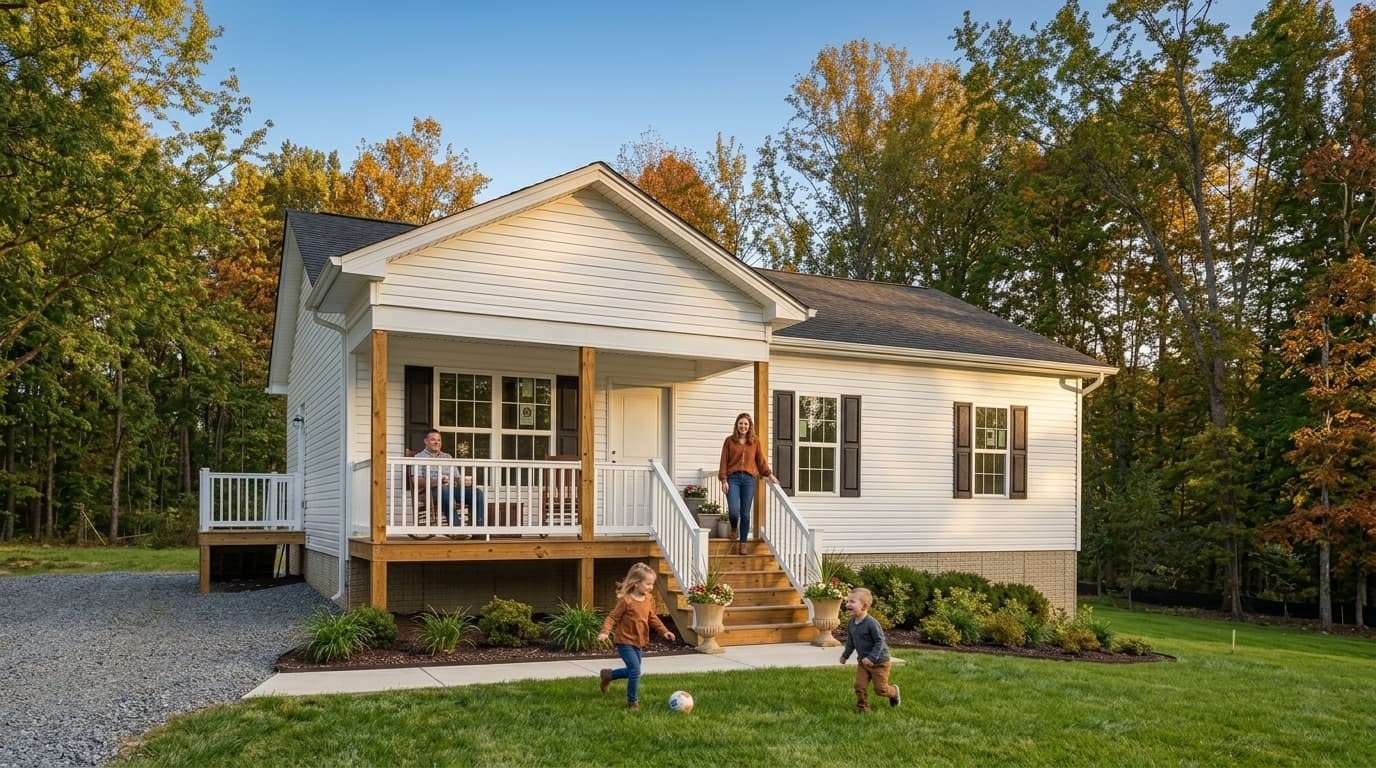
Our Cottage series exists for exactly this reason. The St Albans is 1,120 square feet, three bedrooms and two baths. The Vanover is 1,380. The Madison is 1,409. These are not starter houses in the apologetic sense — they're complete houses with the square footage spent where you live.
If you need a fourth bedroom, the Augusta gets there at 2,175 and the Sussex at 2,198. Compare those against a 3,000-square-foot plan and you can see the size of the lever.
Simple shapes build cheaper than complicated ones
Two houses with identical square footage can cost meaningfully different amounts depending on the shape.
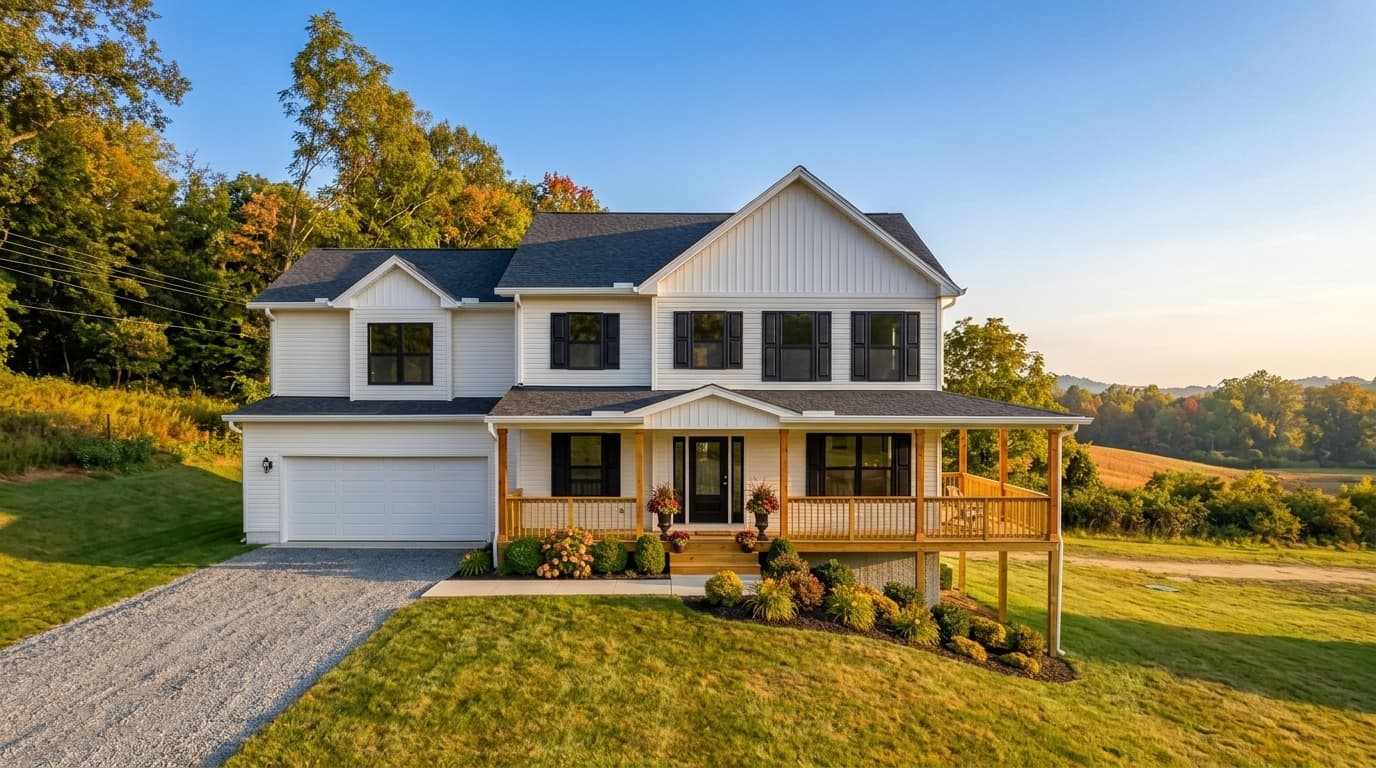
Corners cost money. Roof valleys cost money. Bump-outs, cantilevers, and rooflines that change pitch three times all cost money — in framing labor, in flashing, in the places water eventually wants to find. A rectangle with a clean gable is not a compromise. It's what most of the old farmhouses standing along these back roads happen to be, and they're still standing.
When someone wants to trim a budget, we look at the outline of the house before we look at the finishes. There's usually more room there than people expect.
The lot is part of the house budget
This is the piece that surprises people most.
Two lots with the same asking price can produce very different build costs once you account for what has to happen before a foundation goes in. Length of driveway. Depth to water. Where the soil will take a drainfield and how far that is from where you want the house. How much grading it takes to get a level pad. Whether power is at the road or a long way off.
A flat lot near a road with utilities close by will almost always come in under a beautiful sloped lot at the end of a long approach, even if the sticker on the sloped one is lower.
We keep lots in three counties right now — 29 in Culpeper ranging from 0.15 to 20.04 acres, 6 in Fauquier from 0.66 to 3.45 acres, and 2 in Prince William from 0.62 to 4.66 acres. Before you fall for one, ask us what it costs to build on it, not just what it costs to buy. We'll tell you straight, including when the answer is "more than you want."
Smaller acreage is worth a serious look. A half-acre parcel that's easy to build on and easy to mow leaves money in the house, and most people spend their time within thirty feet of the back door anyway.
Spend where your hands go
Once the size and shape are settled, finishes are where the budget gets nibbled to death — usually in the wrong direction.
Our rule of thumb: spend on the things you touch every day and the things that are expensive to change later. Cabinet hardware, faucets, the front door, the floor in the main living space. Those get used ten thousand times.
Hold back on the things that are easy to change when you have room again. Light fixtures come off with a screwdriver. Paint colors change on a Saturday. Backsplash tile can wait a year. A finished basement can wait five.
What you can't easily change later: the foundation, the framing, the envelope, the window placement, the plumbing rough-in. Those are worth the money now.
Decide early, then stop deciding
The cheapest change is the one made on paper. Once framing is up, a moved wall means undoing work someone already did well.
We ask a lot of questions early and some of them feel premature — where the washer goes, which way the refrigerator door swings, whether you want a hose bib on the far side of the garage. Answering those in a meeting costs nothing. Answering them in week nine costs real money.
Room to grow is cheaper than room you don't need
If you're building at a smaller size because it's what makes sense right now, you can build in the possibility of more later. Framing an unfinished space, stubbing a rough-in, siting the house so an addition has somewhere to go — these are modest decisions now that keep options open.
Plenty of families start with something in the range of the Princeton at 1,588 square feet or the Montgomery at 1,641 and are perfectly happy fifteen years on. Some finish the basement when the third kid arrives. Both outcomes are fine.
Have a look through the full set of plans with your number in mind rather than your wish list. And if you want to know what typically drives cost on a build out here, the FAQ covers a fair bit of it.